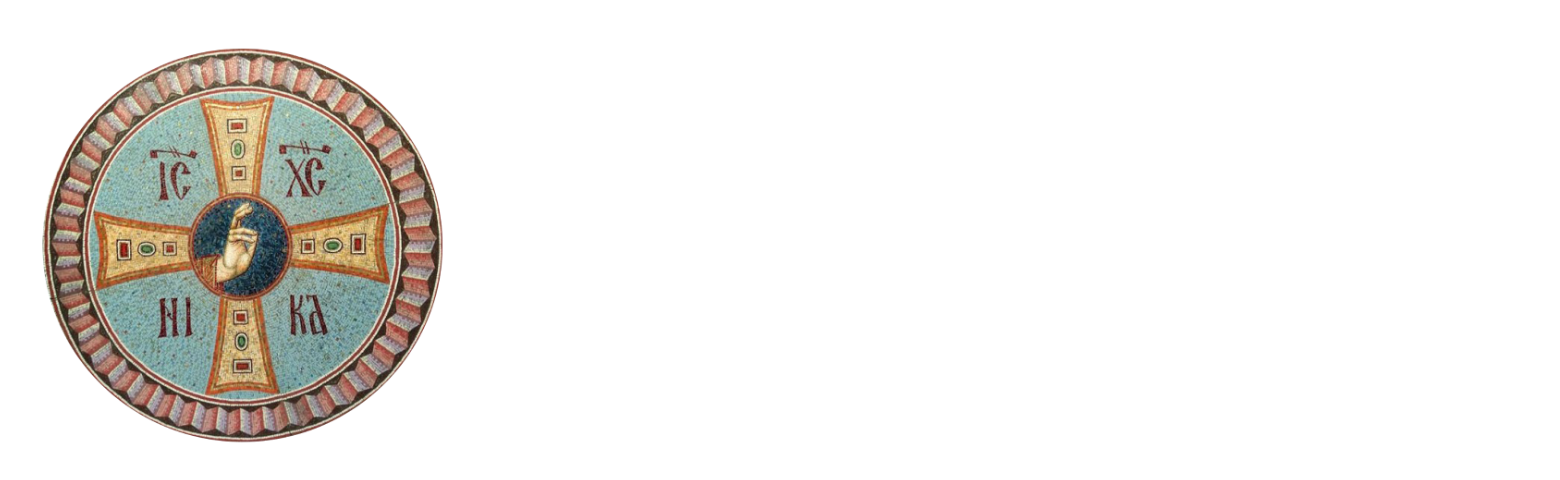
An inspired and highly commendable idea led the learned Archbishop Dr Varsanufie to decide to establish a noble distinction that would symbolically represent the identity of his Diocese and the geography of the Oltenia region at the foot of the mountains, the Cross of Râmnic – a town and diocese in its own right within the Oltenian region. This provides an opportunity for me, whilst expressing my deep appreciation for this founding act, to make a brief – and, I hope, enlightening – note for people today. Thus, in 1370, during the reign of Vladislav I (Vlaicu Vodă), Patriarch Filotei of Constantinople decided, together with the Prince, to establish the Orthodox Metropolis of Severin, which existed until 1503, when, under Radu the Great, this institution – of overwhelming importance to the history of the Romanian Orthodox Church – was moved to Râmnic under the title of the Diocese of Râmnic – New Severin (the same synod also decided on the creation of the Diocese of Buzău). From then on, Râmnic was the ‘New Severin’ of the Diocese, which on 14 November 2009 was elevated to the rank of Archdiocese with the enthronement of Bishop Gherasim as Archbishop.
The heraldic significance of the Cross of Râmnic is steeped in a history that has resonated throughout the development of the chain of monasteries in Vâlcea, almost all of which are linked to princely acts of foundation, and which today form a cradle of Christianity comprising no fewer than 43 monasteries, not counting hermitages and monastic settlements. The Râmnic Cross is intended to recognise, both over time and in due course, the dedication and sometimes even the sacrifice, as well as the devotion and diligence of certain champions of the Orthodox Christian faith from Vâlcea and beyond, who spared no effort, contributing to the enrichment and consolidation of the diverse traditions of foundation, monasticism and scholarship within a climate and repository of spirituality that has come to underpin Râmnic’s identity, first as Noul Severin and subsequently as the Archdiocese of Râmnic.
I understand that this honour will be made public today, 8 June 2018, marking four years of Bishop Dr Varsanufie’s ministry in Râmnic. Over the past four years, eleven new monasteries have been established within the Diocese of Vâlcea, including the Monastery of Saint Calinic near Râmnic Cathedral, the Monastery of Antim Ivireanul, the Monastery of the Exaltation of the Holy Cross, in the hills near the town of Râmnicu Vâlcei, the one at the southernmost tip of the Vâlcea region in the village of Ghioroiu, and finally, the monastery dedicated to Patriarch Justinian Marina in his native village, Suiești, where a new church and a peasant house-museum have also been built, commemorating the great patriarch’s childhood home. Over the past four years, notable progress has been made in the restoration and revitalisation of the Archiepiscopal Palace built by Saint Calinic, as well as his houses and residence from the time of his ministry in Râmnic, the Archdiocese Park, with its many hectares transformed – as can be seen today – into a little corner of paradise filled with flowers and flowering shrubs; the planting of hundreds of lime trees, cherry trees, apple trees, apricot trees and sour cherry trees; the cladding of the palace roof and the cathedral spires with copper sheeting, the bronze busts of the poet Mihai Eminescu and Patriarch Justinian, and, in the town, the bronze bust of Saint Antim Ivireanul. Alongside these, I must also draw attention to a quarterly doctrinal publication entitled Martyria, which is of the highest editorial standard and demonstrates a comprehensive openness to collaboration with prestigious figures from Orthodoxy and, more broadly, from Romanian culture.
I conclude with the confidence that this noble distinction, the Cross of Râmnic, will find a well-deserved, prestigious and honourable place in the recognition of works and figures of significance to Romanian culture and Orthodoxy.